More Applications

Version 24 provides:
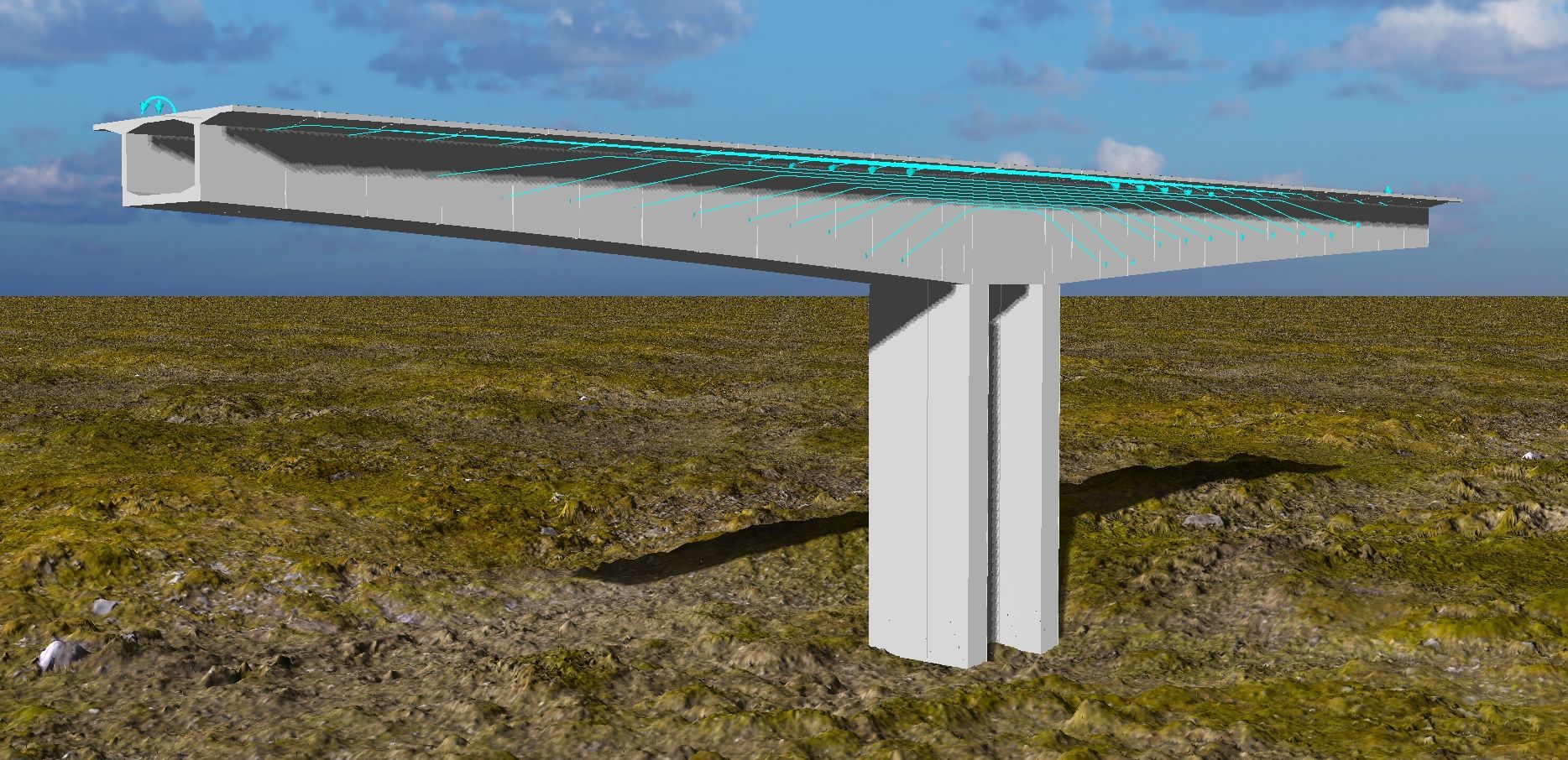
- Quicker and easier modelling of piles and rock anchors - in continuum models using embedded beam elements.
- New soil material models - Soft Soil Material and Modified Mohr-Coulomb (Hardening Soil).
- Improved modelling of bond slip - based on CEB-FIP model code.
Quicker and easier modelling of piles and soil/rock anchors
Quicker tools for piling
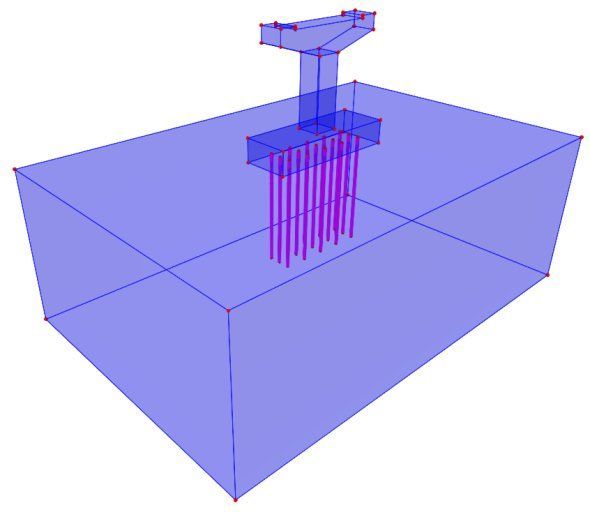
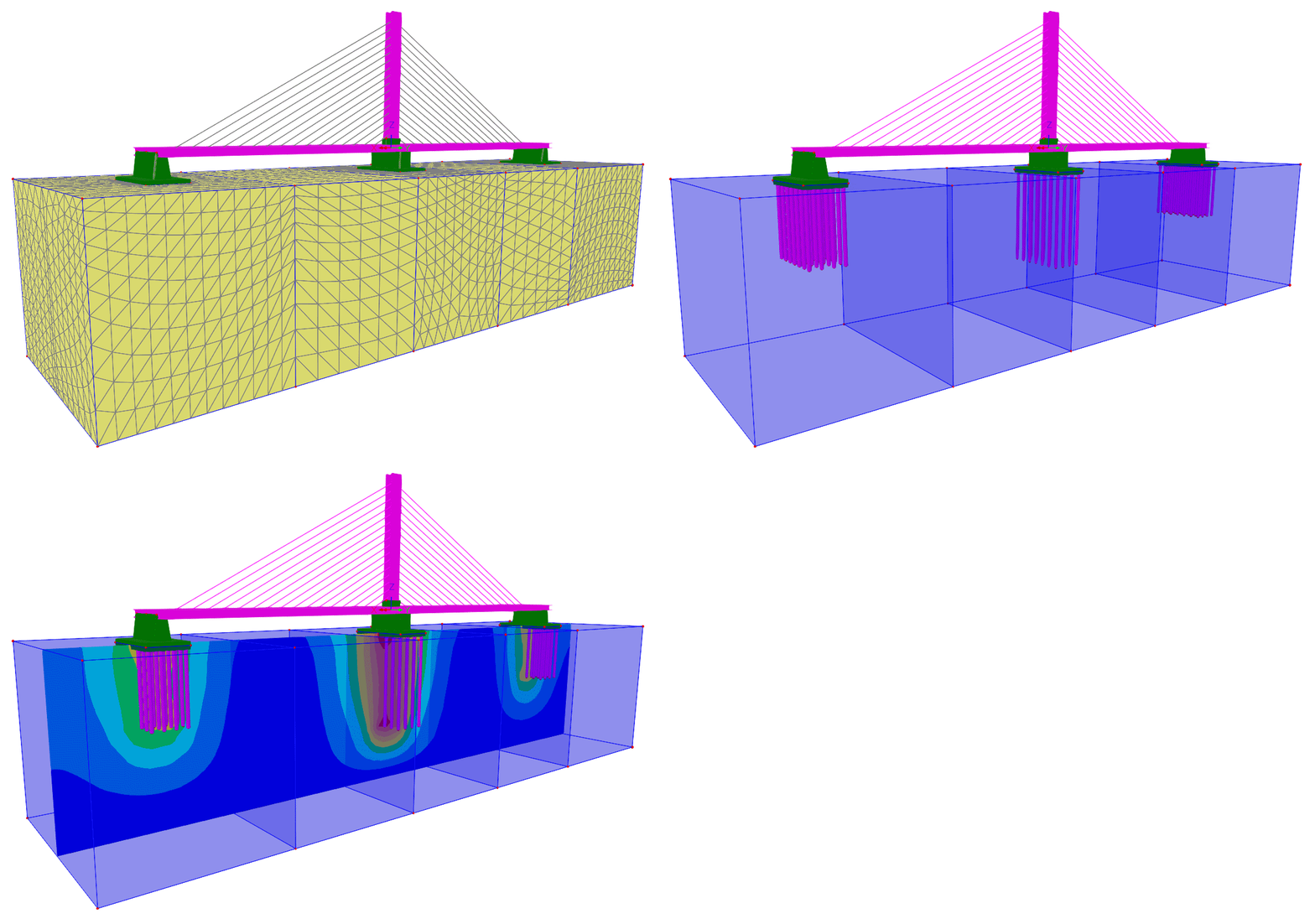
Insert piles easily into 2D or 3D soil continuums using our new embedded beam elements built for the purpose.
Use for single piles or pile groups in vertically and laterally loaded scenarios. Model piles with multiple sections and complex soil strata using borehole data for accurate results.
Model skin friction and end bearing using two new types of interfaces. Vary skin friction along pile as soil properties change. Allow for post-failure slip in both support and downdrag actions.
Either use the LUSAS Modeller interface to define layouts, or import from CAD/BIM or automate with Python and Grasshopper.
Ground improvement and anchors
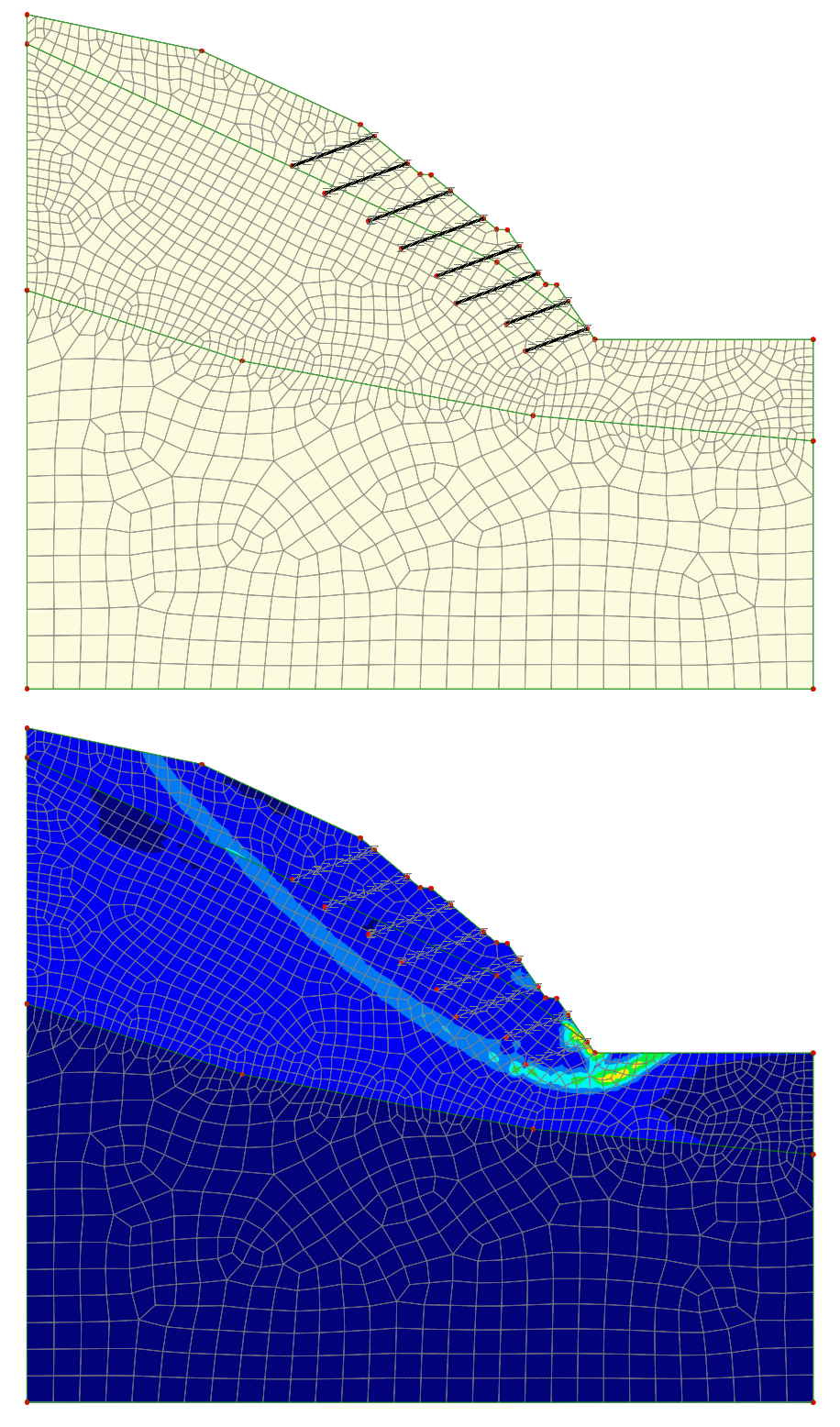
Version 24's new facilities don’t just help with piling, they help the modelling of ground anchors, rock bolts, soil nailing, micropiling, stone columns and other soil improvement methods too.
With the improved facilities for modelling the interface between the structural elements, you can now model phenomena like pull-out of anchors more easily.
New soil material models
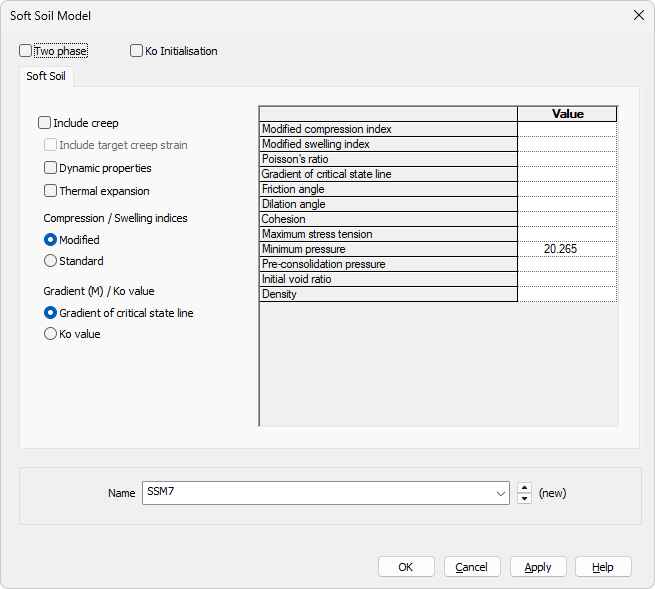
Soft soil and Modified Mohr-Coulomb (HS)
We’ve added to the existing list of material models which already included Duncan-Chang, Hoek-Brown, Mohr Coulomb, Barcelona, Small-strain hardening and Modified Cam Clay.
The new Mohr Coulomb material has been improved to include strain hardening. The new soft soil model allows assessment of highly compressible, low-strength materials like normally consolidated clays, peats, and silty clays. It captures their highly nonlinear behaviour and unique settlement, consolidation, and failure characteristics.
Bond slip
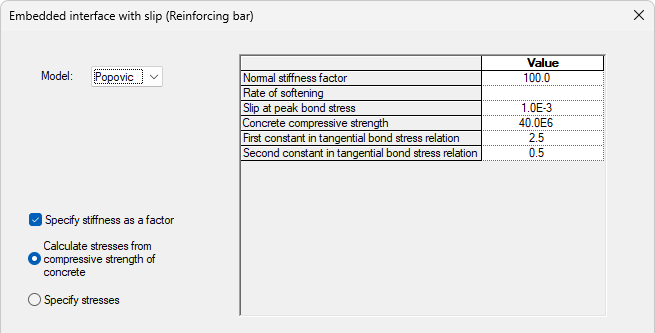
A new embedded interface with slip (Reinforcing bar) material model has been added to model the slip between embedded reinforcing bars and the surrounding cementitious matrix, which plays an important role in the accurate prediction of crack widths, as well as ultimate load analysis when bond slip contributes to failure.
Nonlinear interface laws are used to describe the bond stress-slip relationship with one law taken from the CEB-FIP model code, whilst the second, which can be considered a smoothed version of this, is the Popovic model. Both models enable the simulation of the nonlinear bond slip behaviour to be modelled.